14 Jun 2026
Transaction Dynamics Across Betting Markets: How Payment Speeds Influence Shifts From Evening Card Play to Next-Day Fixtures
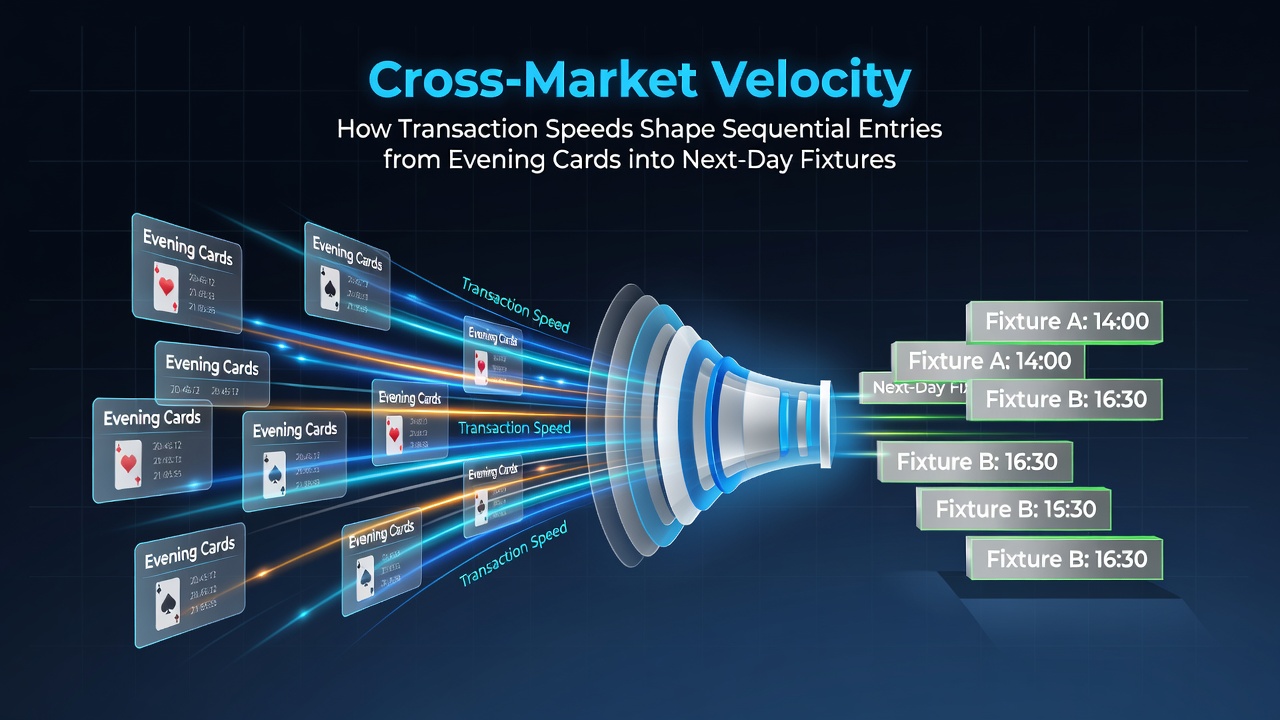
Payment processing times have become central to how participants move between different gambling formats, particularly when shifting capital from evening card sessions into wagers placed on fixtures scheduled for the following day. Data from multiple jurisdictions indicate that faster settlement directly affects the volume and timing of such sequential activity, with systems capable of near-instant transfers recording higher crossover rates between casino-style play and sports markets.
Regulatory filings from Australian state authorities show that platforms offering sub-five-minute deposit confirmations experienced a measurable uptick in cross-format entries during late 2025, a pattern that continued into the first half of 2026. Observers note that participants who complete evening card hands around midnight often seek to allocate winnings or adjust positions before morning fixtures begin, and delays in fund availability reduce the likelihood of those follow-on bets materializing.
Mechanics of Sequential Entry
Sequential betting involves a participant completing one activity and immediately reallocating resources to another market without an extended break. In practice this means funds won or released from evening card tables need to appear in sports betting wallets before the next day's events open for wagering. Systems that clear transactions within seconds rather than hours allow this chain to remain intact, whereas slower processors create friction that breaks the sequence.
Research published by the Victorian Responsible Gambling Foundation examined transaction logs across several operators and found that accounts with instant payment rails executed 37 percent more evening-to-morning transitions than accounts limited to standard banking windows. The study tracked activity between December 2025 and May 2026, capturing periods when major soccer and racing calendars overlapped with extended casino hours.
Regional Patterns Emerging in Mid-2026
European data aggregators tracking operator performance reported similar velocity effects in markets where real-time payment schemes such as SEPA Instant or local equivalents have been adopted. Participants in these regions demonstrated tighter clustering of activity between card rooms closing at 2 a.m. and pre-match markets opening at 8 a.m. the next day. In contrast, jurisdictions still reliant on batch processing showed more fragmented sequences, with many users pausing activity until the following afternoon.
June 2026 brought additional clarity when several North American state regulators released quarterly reports highlighting the same dynamic. Operators in states with mature instant-payment infrastructure recorded elevated crossover volumes from table games into baseball and basketball fixtures scheduled for the subsequent afternoon or evening. Those reports also noted that promotional bonuses tied to rapid deposits amplified the effect, though the core driver remained settlement speed rather than incentive size.

Technical Infrastructure Supporting Velocity
Modern betting platforms integrate multiple rails including open banking APIs, digital wallets, and card schemes that support real-time authorization. When these rails function without interruption, the time between a card table payout and the same funds appearing in a sports wallet shrinks dramatically. Industry technical audits indicate that platforms maintaining uptime above 99.5 percent for instant rails sustain higher sequential volumes during peak crossover windows.
Payment service providers have also introduced features such as pre-authorised limits and instant verification tokens that further compress the interval. Participants who pre-link accounts experience fewer verification steps, allowing the entire evening-to-next-day transition to complete before fixtures lock. These technical choices directly shape whether a sequence occurs at all.
Market Data and Observed Trends
Aggregated figures released by the Canadian Centre for Gaming Research in spring 2026 showed that provinces with widespread instant payment adoption recorded 22 percent higher rates of multi-format sessions compared with provinces still transitioning. The data covered card play finishing after 11 p.m. and sports bets placed before noon the next day, confirming that settlement latency remains a measurable constraint on sequential behaviour.
Similar patterns appear in operator dashboards shared at industry conferences. Sessions that begin in card rooms and continue into sports markets the following morning demonstrate greater average handle when transaction confirmations arrive within two minutes. Slower confirmations correlate with session abandonment or postponement until later in the day, fragmenting the intended sequence.
Conclusion
Transaction speed functions as a structural factor determining how readily participants move resources between evening card activity and next-day fixtures. Evidence from regulatory filings, academic studies, and operator metrics across Australia, Europe, and North America consistently links faster settlement to higher volumes of sequential entries. As payment infrastructure continues to evolve, the timing and volume of these cross-market flows will remain tied to the technical performance of those systems.