23 Jun 2026
Following the Money: E-Wallet Systems Facilitating Multi-Market Betting Sequences in Football, Horse Racing, and Table Games

Operators have expanded e-wallet connections that let users move funds between football markets, track events, and table games without repeated external transfers, and data from regulatory filings show these links handle millions of cross-category transactions each month. Payment processors integrate directly with betting platforms so that a single deposit can support sequential activity, while transaction records create clear trails that operators and auditors review for compliance.
Platform Integrations and Transaction Pathways
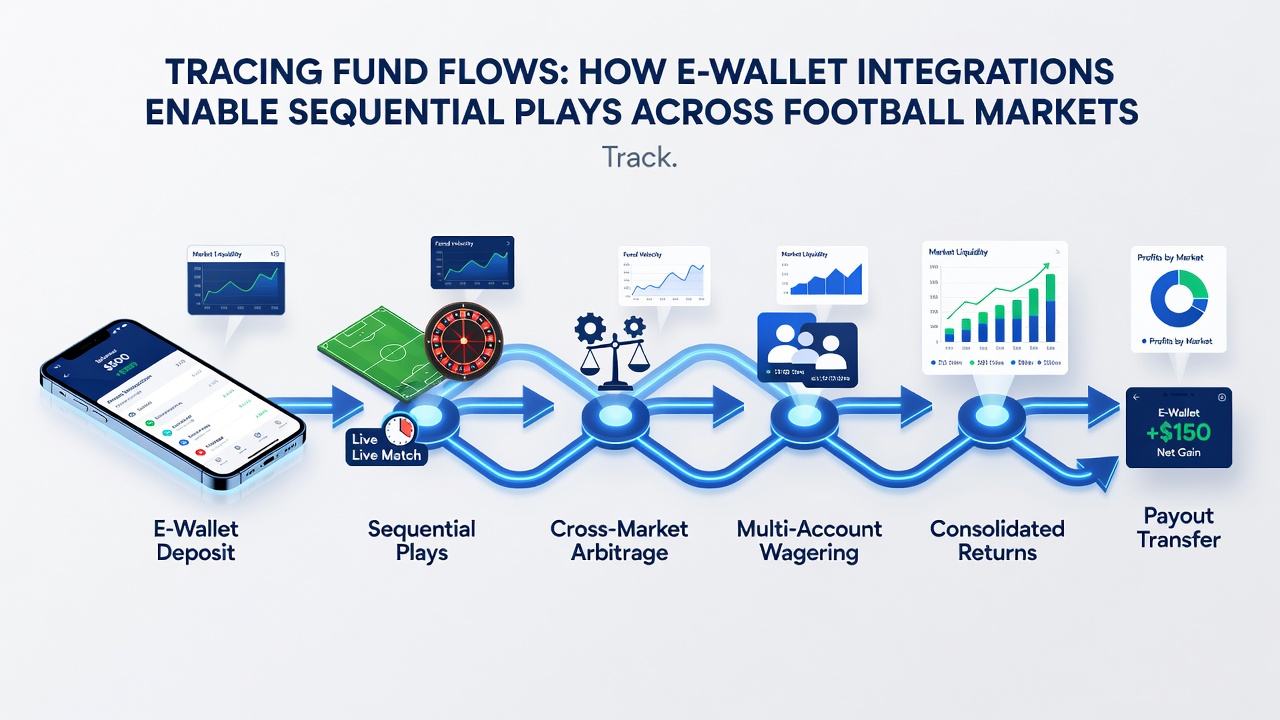
Football betting interfaces now connect to the same digital wallets used for horse racing accounts, and users complete a wager on live match odds then shift remaining balances to upcoming race pools through internal ledgers. Table game sections on the same apps accept those same wallet balances, which means the initial funding step covers activity across all three categories. Records kept by processors list timestamps, amounts, and destination markets, so tracing becomes a matter of following sequential ledger entries rather than reconstructing separate bank transfers.
Systems log each movement with unique identifiers that remain consistent across football, racing, and casino modules, and this structure reduces the number of external payment rails required. Operators report that average session lengths increase when users avoid repeated funding steps, yet total funds in play stay within the same digital container until withdrawal occurs.
Sequential Activity Patterns Observed in 2026
During June 2026 several major platforms activated updated APIs that allow instant internal transfers between football in-play markets and evening race cards, and analysts tracking transaction volumes noted a measurable rise in multi-category sessions. Users often place football singles first, then route part of any return directly into horse racing doubles, followed by smaller allocations to blackjack or roulette tables. Wallet providers supply exportable statements that list every internal move with market codes attached, which simplifies audit trails for both operators and external reviewers.
Regulatory Reporting and Data Visibility
European regulators require operators to maintain records that separate funds by market category even when held in one wallet, and similar rules appear in Australian state frameworks administered through the Australian Communications and Media Authority. Transaction reports submitted quarterly include breakdowns showing how much moved from football to racing and onward to table games, which gives oversight bodies visibility without forcing users to manage multiple accounts. Nevada Gaming Control Board filings similarly track digital wallet activity across sports and gaming verticals, and those datasets reveal consistent patterns of sequential usage rather than isolated category play.
Wallet providers add optional tagging features that operators activate during integration, and each tag corresponds to a specific event or table type. This tagging allows automated compliance checks to flag unusual sequences that cross certain volume thresholds, yet the underlying funds remain in the same user-controlled balance until an external withdrawal is requested.
Technical Infrastructure Supporting Cross-Market Flows
API endpoints now expose balance queries and transfer commands that work uniformly across football, racing, and casino modules, and these endpoints return confirmation codes that appear in user statements. Security layers encrypt the transfer instructions at the moment they leave the football section and arrive in the racing ledger, while maintaining the same encryption when the balance reaches table game servers. Because the wallet sits outside any single market module, the system avoids reloading funds through external processors for each new activity type.
Developers built reconciliation engines that match outgoing football debits with incoming racing credits in real time, and any unmatched entries trigger alerts to compliance teams. These engines operate on the same infrastructure used for table game settlements, which creates a unified view of fund movement without requiring separate reconciliation processes for each vertical.
Conclusion
E-wallet integrations have produced traceable pathways that connect football markets with track events and table games through internal transfers rather than repeated external deposits. Transaction records generated by these systems supply the data needed for regulatory reporting across multiple jurisdictions, while operators gain operational efficiency from consolidated funding steps. As platforms continue to refine API connections and tagging protocols, the ability to follow fund flows across sequential plays remains a core feature of the current digital betting environment.