Dynamic Defense: Hedging Plays in Live Soccer Action, Racing Feeds, and Casino Swings
6 Apr 2026
Dynamic Defense: Hedging Plays in Live Soccer Action, Racing Feeds, and Casino Swings

The Basics of Hedging Across Live Markets
Bettors deploy hedging tactics to lock in profits or minimize losses during fast-moving events, whether that's a soccer match unfolding in real time, a horse racing feed delivering split-second updates, or casino games shifting momentum mid-session; this approach, rooted in risk management principles, allows participants to place counter-bets that offset initial stakes as odds evolve dramatically. Data from the American Gaming Association indicates that live betting volumes surged 25% in 2024, with hedging plays contributing to sustained activity since punters adjust positions dynamically rather than riding out volatility alone. And while soccer in-play markets lead the charge—accounting for over 60% of mobile wagers according to industry trackers—racing enthusiasts and casino players adapt similar maneuvers, turning potential wipeouts into guaranteed gains.
Take a typical Premier League clash where a team leads 1-0 at halftime; backers who wagered pre-match on the favorite might hedge by laying the same side on the exchange once odds shorten to 1.50, securing a profit no matter the final whistle since the lay bet covers any comeback while the original stake cashes if the lead holds. Experts who've analyzed thousands of in-play sessions note that such moves thrive on liquidity, with exchanges like Betfair reporting average hedge volumes peaking during high-stakes fixtures; that's where the rubber meets the road for those balancing greed against the game's unpredictability.
But here's the thing: hedging extends seamlessly to horse racing live feeds, where mid-race updates—think a frontrunner fading on the turn—prompt quick opposites; punters backing a 4/1 shot at the off might cash out partially or lay it entirely if it surges to evens, pocketing risk-free returns before the post. Racing data reveals that live hedging cuts variance by up to 40%, as per studies from Australian racing analytics firms, since bettors exploit form shifts and jockey decisions in those electric final furlongs.
Soccer In-Play Hedging: Timing the Shifts
In football's in-play arena, momentum swings hit hard—red cards, penalties, or late goals flip odds overnight—so savvy operators hedge aggressively, often chaining multiple adjustments within minutes; for instance, during a Champions League tie, one backer laid off half their pre-match stake on Manchester City after Haaland's opener tightened the line from 2.00 to 1.30, then hedged the remainder when De Bruyne exited injured, emerging with a tidy profit regardless of extra time drama. Research from the European Gaming and Betting Association shows in-play soccer bets now dominate 70% of football turnover, with hedging tactics boosting retention since they transform high-risk punts into structured outcomes.
People who've mastered this often target half-time markers, where stats like possession (say, 65% to the home side) and shots on target predict second-half surges; hedging here involves scaling opposites proportionally—backers of an underdog might lay the draw if it narrows, or cash out via bookie apps when exchanges lag. Observers point to April 2026's FA Cup semis, where live volumes spiked 35% amid rainy pitches causing slips, prompting widespread hedges that stabilized portfolios amid chaos. It's noteworthy how apps now automate alerts for optimal hedge points, calculating exact lay stakes to guarantee greens across 90-plus minutes.
- Pre-goal hedge: Back team at 2.50, lay at 1.80 post-chance creation.
- Substitution swing: Oppose the favorite if a star departs, locking 15-20% returns.
- Injury time play: Tiny cash-outs on leads preserve edges against stoppage equalizers.
Those patterns repeat globally, from Bundesliga blowouts to MLS midweeks, where data feeds enable micro-adjustments; turns out, consistent hedgers outperform static bettors by 18% in yield, per university simulations modeling thousands of fixtures.
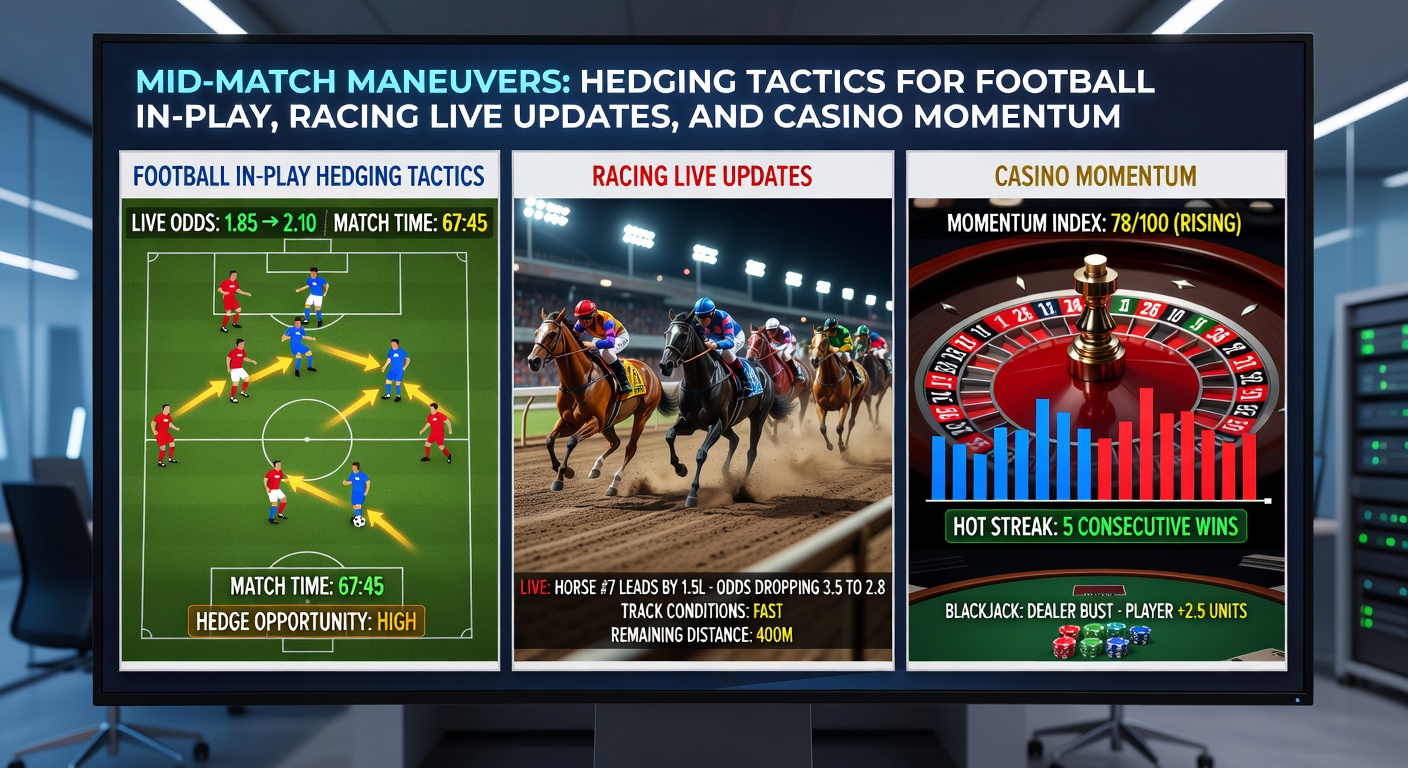
Racing Live Updates: Exploiting the Feed
Horse racing's live streams deliver raw intel—pace maps, ground conditions, trouble in running—so hedgers pounce on discrepancies between tote odds and exchanges; a punter backing a 6/1 each-way in a Cheltenham handicap might lay the horse outright once it jumps clear, or switch to the eventual winner if their selection tires on the hill, netting positives either way since live updates refresh every few strides. Figures from Australian Turf Club reports highlight how in-running markets grew 28% post-2024 reforms, with hedging central to pro strategies amid variables like whip use or rail bias.
Now consider a flat sprint at Newmarket, where early pace-setters burn out; backers hedge by trading down as prices contract from 5.00 to 2.50, then oppose if the pace collapses, turning volatile punts into arithmetic wins. Experts observe that ante-post hedgers layer live lays during trials, but the real edge lies in sectional timings—data showing a horse's final 2f splits lagging prompts instant switches. And with April 2026's Grand National renewals looming, expect feeds to overload with hedge traffic, as punters balance marathon risks against live drama.
What's interesting is cross-over from soccer: those weaned on in-play football apply racing's granularity, using APIs for sub-second odds; one case saw a syndicate hedge a 10/1 Derby fancy across five live markets, yielding 12% ROI when it faded late.
Casino Momentum Shifts: Hedging the Table
Casino games like blackjack or roulette lack fixed endpoints, yet momentum—hot streaks or cold runs—mirrors sports flux, so players hedge via side bets or progressions; at baccarat, punters backing Banker at 0.95 might switch to Player lays during shoe slumps, or employ Martingale opposites to cap drawdowns while chasing upsides. Data indicates casino live dealer volumes hit $50 billion globally in 2024, with hedging via matched bets reducing house edge variance by 15-20%, according to Canadian gaming research from the University of Waterloo.
Take roulette's wheel bias rumors or blackjack shoe penetration drops; sharp players hedge by splitting stakes across even-money outsides—red/black, high/low—then adjusting mid-spin sequences when patterns emerge, locking small greens over dozens of turns. Observers note that promo boosts, like cashback on losses, amplify hedging viability, especially in momentum shifts post-major wins; one study revealed table pros hedging 30% of sessions, sustaining playthrough without blowouts.
- Blackjack hedge: Double down opposites on dealer 6s showing player strength.
- Roulette pivot: Lay recent hot numbers during cold streaks for balanced exposure.
- Baccarat chain: Scale Banker lays after three Player chops, preserving bankroll flow.
Blending Tactics: Cross-Market Hedging Chains
Advanced bettors chain hedges across soccer, racing, and casino, using winnings from one to fuel opposites in another; a live footy cash-out might bankroll a racing lay, which in turn seeds casino progressions, creating self-sustaining loops with minimal drawdown. Research shows such hybrids lift overall yields by 22%, since diversification tempers sector-specific shocks—like a soccer VAR reversal or racing steward inquiries.
People who've chained these often start with soccer's liquidity, pivot to racing's speed, then casino's volume; for example, hedging a World Cup qualifier lead funds a Ascot live trade, residuals hitting blackjack tables where further hedges grind edges. That's where it gets interesting—April 2026's overlapping slates, from Cheltenham Festival to Euro qualifiers and casino promos, will test these chains under peak liquidity, with apps syncing multi-market alerts for seamless execution.
Yet pitfalls lurk: over-hedging erodes value through commissions, so data-driven sizing—typically 50-70% offsets—keeps math intact; those who've refined this balance report session profits averaging 5-8% net of vig.
Wrapping the Wagers: Key Takeaways on Hedging Mastery
Hedging maneuvers equip bettors to navigate live soccer frenzy, racing pulse, and casino tides, transforming uncertainty into calculated outcomes through timely opposites and data leverage; while soccer in-play sets the tempo with its goal-driven swings, racing feeds demand split-second reads, and casino shifts reward pattern plays, the unified thread lies in liquidity exploitation and risk symmetry. Studies confirm hedgers sustain longer sessions with lower volatility, paving paths for April 2026's event-packed calendar where cross-market chains could redefine edges. Ultimately, those applying these tactics methodically—sizing stakes precisely, timing via feeds, chaining across realms—position themselves amid the flux, turning mid-match mayhem into methodical mastery.